Ukrainian embroidery symbols: meanings and where they come from
What the motifs on a Ukrainian vyshyvanka can mean: geometric, plant, animal and human figures, colors, regional styles, and how to tell folk meaning from modern myth.
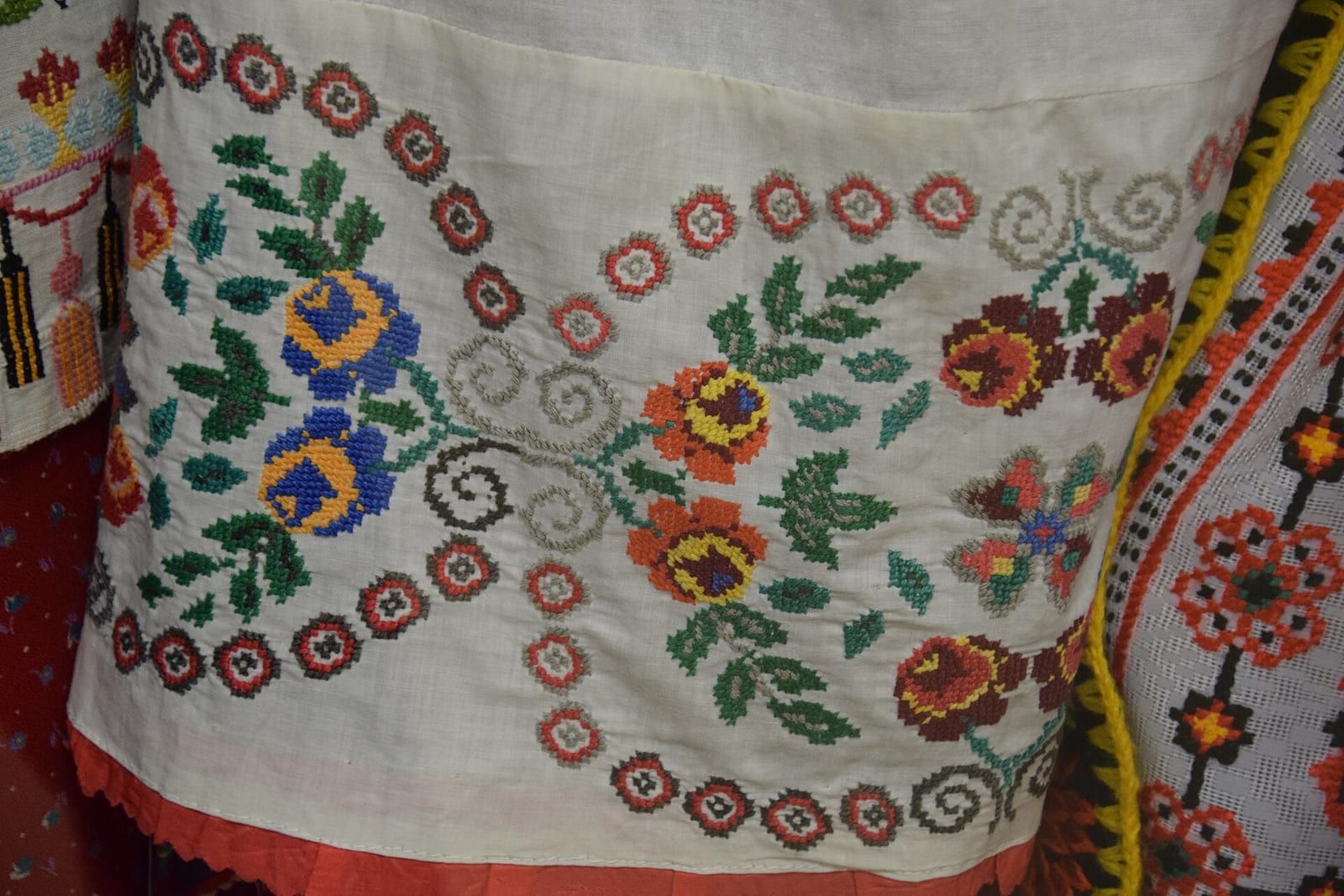
Ukrainian embroidery (vyshyvka) uses four broad families of motifs: geometric shapes, plants, animals and birds, and stylized human figures. Some of them — the tree of life, the eight-pointed star, the rhombus — are thought to have carried ritual meaning in village tradition, but there was never a single fixed “dictionary” of symbols. The honest way to read a pattern is to ask what it is called, where it comes from, and how scholars interpret it, while treating modern “secret code” explanations with caution.
Why meanings are tricky
If you search for the meaning of a vyshyvanka pattern, you will find confident answers: this sign protects from illness, that one brings wealth. Much of this is recent. Scholars do name the tree of life, the protective female figure and solar signs as old motifs that survived in embroidery until the late 19th century. But researchers also point out that the most famous “meanings” were often reconstructed in the 20th century.
The Ukrainian folk-dress researcher Oksana Kosmina, for example, notes that the writer and folklorist Olena Pchilka, who published an influential album of Ukrainian ornament in 1876, considered the patterns essentially decorative. Kosmina also calls the popular reading of a square or rhombus with a dot as a “sown field” a myth, and traces it to the Soviet archaeologist Boris Rybakov.
So it helps to keep three layers apart:
- Names recorded in villages — the most reliable evidence we have.
- Interpretations by ethnographers and art historians — worth knowing, but they are interpretations.
- Modern esoteric readings (“energy codes”, “the nation’s DNA”) — part of today’s culture, not of history.
Geometric motifs
Geometry is the oldest and most widespread layer. Researchers note that geometric designs preserved older symbols, while floral ones came later and varied more. Remote areas such as Polissia in the north and the Hutsul highlands in the Carpathians kept strictly geometric patterns longest.
- Rhombus (diamond). The most common reading links it to fertility and the earth; a rhombus divided into four with dots inside is popularly called a “sown field”. Others see it simply as the shape that counted stitches naturally produce.
- Eight-pointed star. One of the most frequent motifs in Ukraine, sometimes called ruzha (“rose”) or, colloquially, vosmyrozhka. It is often read as a sun or light symbol, and in Christian times associated with the Star of Bethlehem.
- Wave and meander. A continuous wavy line, zigzag or meander, often running along borders, is popularly interpreted as water or the endlessness of life.
- Cross. In Christian Ukraine the straight cross was first of all a Christian sign; older solar readings are scholarly reconstructions.
Plant motifs
Plant ornament comes in two forms. The older one is geometrised: a “broken” little tree, a branch or a pumpkin leaf drawn in angular lines. The newer one is naturalistic — roses, bunches of grapes, sprigs with berries — and spread across Ukraine with cross-stitch at the turn of the 20th century.
- Tree of life. A tree growing from a pot or mound, often with birds on either side, especially on ritual towels (rushnyky). Ethnographers connect it with the idea of a world tree and with the continuity of the family.
- Hops and grapes. Typical of the Kyiv region. In Ukrainian wedding songs, hops are often an image of youth, love and merriment.
- Viburnum (kalyna) and periwinkle. Both are rich symbols in folk song — maidenhood, faithfulness, family — but not every embroidered berry was meant as a message.
Animals and birds
Animal motifs are, by scholarly accounts, relatively rare, and usually so stylized that only their names reveal them. In Volhynia and Polissia, geometric patterns were called “ox eyes”, “horse heads” or “deer antlers” — names based on resemblance, not proof of an animal cult. Birds — peacocks, doves, roosters — appear mostly on towels, often in pairs flanking a tree. Roosters became especially popular on 20th-century cross-stitched towels and are commonly read as a sign of dawn and family happiness.
Human figures
A stylized woman with raised or lowered arms, often with a rhombus-shaped body, is the best-known and most debated motif in this group. Today it is usually called Berehynia (“protectress”). Some ethnographers connect such figures with ancient agrarian beliefs and veneration of a mother figure. The name Berehynia for this motif, however, is a 20th-century label: it became a mass phenomenon only in the late 1980s, when, as the historian Oksana Kis argues, the image of Berehynia was essentially reinvented. Village embroiderers may well have called the motif something else.
Motifs at a glance
| Motif | Common interpretation | Where you see it |
|---|---|---|
| Rhombus, rhombus with dots | Fertility, earth, “sown field” (debated) | Everywhere; strong in Polissia, Podillia, Hutsul region |
| Eight-pointed star | Sun, light; later the Christmas star | Polissia, Podillia, central Ukraine |
| Wave, meander (“endless” line) | Water, continuity of life (popular reading) | Borders of shirts and towels |
| Tree of life | World tree, family line, generations | Ritual towels of central Ukraine and Podillia |
| Hops, grapes | Youth, love, abundance (from folk song) | Kyiv region, Polissia |
| Viburnum, periwinkle | Maidenhood, faithfulness, family | Central Ukraine, 20th-century cross-stitch |
| Paired birds, roosters | Spring, dawn, couple, happiness | Towels of central Ukraine |
| “Deer antlers”, “ox eyes” | Named for their shape; deeper meaning unproven | Volhynia, Polissia |
| Female figure (“Berehynia”) | Mother, fertility, protection | Towels, more rarely shirts |
Treat the table as a guide, not a rulebook: the same motif could have different names in neighboring villages.
What about colors?
You will often read that red means life and love, black means earth or sorrow, white means purity, and green means spring. These associations exist in folk culture, but color in embroidery depended heavily on what thread was available — plant dyes such as oak bark at first, then factory-made thread and aniline dyes from the late 19th century. Kosmina explains regional palettes mainly by thread availability.
The famous black shirts of Borshchiv in western Podillia are a good example. A romantic legend says they began with widows who vowed to wear mourning, but staff at the Ternopil regional museum note that such shirts were worn for every occasion — weddings, holidays and everyday life alike.
Regional styles in brief
| Region | Typical look |
|---|---|
| Poltava | White-on-white: white, gray, ochre threads; openwork and satin stitch |
| Hutsul region | Tiny, dense geometry; high-contrast colors that change from village to village |
| Podillia | Fine geometry; black or black-and-red; very dark shirts in the west |
| Kyiv region | Red bunches of grapes and hops, sprigs with berries |
| Bukovyna | Rich palette, silk, metallic thread and glass beads |
| Polissia | Archaic red or black rhombuses, stars and zigzags |
Scholars note that red-and-black floral cross-stitch spread across the whole country around 1900 and displaced many local techniques and colors. So a red-and-black rose on a shirt tells you little about its region.
If you are buying or stitching one
For diaspora families, a vyshyvanka is often a link to grandparents rather than a code to decipher. If you want to wear a motif with meaning, choose one whose story you know — and feel free to give it your own. Just be wary of shops that sell “ancient protective codes” without any evidence behind them. If you already own an old family shirt, our Ukrainian guide on caring for a vyshyvanka explains how to wash and store it safely.
If you read Ukrainian, our longer guide to the meaning of embroidery ornaments and the comparison of regional embroidery styles go into more detail. For individual motifs, see our encyclopedia of symbols — for example, the tree of life, the eight-pointed star and kalyna.
FAQ
Does every pattern on a vyshyvanka have a hidden meaning?
No. Some motifs carried ritual meaning in village tradition, but many were valued simply as beautiful, and embroiderers often named them after everyday things — plums, pine twigs, goose feet.
Is it disrespectful for a non-Ukrainian to wear a vyshyvanka?
Generally no. Ukrainians tend to welcome friends wearing embroidered shirts, especially on Vyshyvanka Day in May. Choose a well-made shirt and avoid buying cheap copies that misuse traditional names.
What does red and black embroidery mean?
Popular readings link red with life and love and black with the earth or sorrow. Historians caution that the red-and-black combination largely spread with cross-stitch fashion around 1900, and that color depended heavily on available thread.
How can I find out where my grandmother’s shirt comes from?
Look at the technique, colors and placement of embroidery, then compare it with museum collections. A Ukrainian museum or ethnographer can often narrow it down to a region or even a village.